Wednesday, February 6, 2013

Life's Handbook: Blog 2

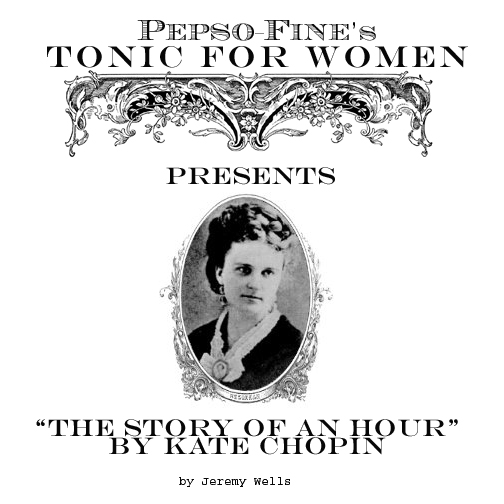
In the event that this blog turns somewhat inspirational and more like a therapy session, I'd like to apologize. I am still on the rather new notion that I am enjoying these literature stories we are reading and it is all a bit new to me. I have found while reading and discussing these tales that there is a lesson to be learned and something to relate to in almost every story. Some of these things have come naturally to me; others have been through some deeper digging in class. The title of this particular blog post is very much inspired by Kate Chopin, whose stories tend to take an unexpected turn or ironic flip of events, such as in the short work The Story of an Hour. 


Though we have defined irony in a few different ways in class (once upon a time), I figured I should include the professional definition again.
Irony (noun): The expression of one's meaning by using language that normally signifies the opposite, typically  for humorous or emphatic effect. 

Most certainly in The Story of an Hour there was an element of surprise and when the expected widow, Mrs. Mallard, becomes the deceased of the couple, there was shock. To me, this is the definition of irony, but to others, this ending was expected. The evidence comes in the form of language - something that is extremely indicative in the time period of the stories we've been reading. For instance, before Mrs. Mallard's husband returns, at her point of "freedom," she is referred to as "she" and "her." After his unexpected arrival, she is named and called the "wife," as if she is not a singular, recognizable woman, but only Mr. Mallard's wife. During the time, women were pioneered by their men, and as referenced in history, married women disappeared in the eyes of the law. Keeping up with reputation and acceptance, before her husband's return, Mrs. Mallard was expected to grieve and mourn her husband (and sole supporter) and his absence in her life. Here you will find further scholarly, interesting discussion of other themes and opinions of The Story of an Hour.


Keeping up with reputation and expected roles, Booker T. Washington brought a dynamic approach to the position of black Americans in society. In advocating a path for new (and previously very oppressed) citizens, he writes in Up From Slavery that they must accept their lesser place in society and grow from it. Without first understanding where you are, you will never fully reach the place you're destined to go. Though it is a hard concept for anyone to grasp, this is similar to the suggestion Chopin was making in The Story of an Hour. Mrs. Mallard never fully accepted her place and was not happy, and it ultimately ended in her demise. Washington pushes the idea home that you musn't be unsatisfied with the lower end of things if you are doing your best, because after all, a big idea in life is that we shouldn't take the little things for granted. There was an example we used in class that really struck home for me in this instance: Someone put that toilet paper there. I realized that I never truly think of that and how much I just expect things as trivial as toilet paper to be there whenever I need it. We should all be more appreciative and thankful for those small things and the people who do those little things for us should definitely be proud of the position they hold.


Taking a slightly darker turn, The Blue Hotel by Stephen Crane teaches us, among other things, not to jump to conclusions. As spoken in class, "Everyone has a reason for telling the stories they do." Though the Swede in this instance was clearly not the most likable guy, there was a reason for the way he acted. He wasn't the most awful person in the world, either, and no one deserves the treatment he received even if he had a bad attitude. In this case, his demeanor got him into the position he held relative to everyone else, but that is to open a new discussion. I have always been interested in the battle of Nature vs. Nurture. How much of which determines what a person is made of and the things they choose and prefer? Though this is really a subjective story, could the Swede have been driven to act the way he did because of heredity, or were his actions completely a result of the influences he'd had in life?


I suppose there is some point in the discussion where the answer arrives that it simply does not matter. Like Mrs. Mallard, his ending was determined by the position he held (granted that his was most likely chosen, not given to him, much like the African Americans referenced in Washington's short story). Regardless, I found the recurring them to be interesting, especially given the circumstances under which each was given. Whether a victim of circumstance or maybe even a martyr of chance, these characters were similarly subjected to an overall very careful battle between who they were and what they could be.

"Half the world is composed of people who have something to say and can't, and the other half who have nothing to say and keep on saying it. "- Robert Frost

Wednesday, January 23, 2013

A Pessimistic View: Blog 1

So far in American Literature we have read pieces by Sam Clemens (Mark Twain), Bret Harte, and Ambrose Bierce. With each story, I thought I had not found a recurring theme, but looking back now, I believe I have found what I cannot believe I missed at first glance. Pessimism may not be the theme of the stories, but ultimately, there is the element in each of the stories we have read thus far. For instance, in Mark Twain’s Journalism in Tennessee, though somewhat meant to be humorous, the main character gets shot and bruised and broken and ultimately ends up in a hospital without a job. In The Luck of Roaring Camp, it appears as though a rowdy group of roughnecks have finally found the source of calm and pride to their camp and it not only slips away from them, it is taken from them in the form of a freak accidental death. What is perhaps my favorite selection we have read so far is called The Devil’s Dictionary by Ambrose Bierce. This dictionary is the definition of pessimism in my opinion; it contains clearly one-sided, albeit sometimes true, meanings of many words.

The Devil’s Dictionary is what some (or most) people would call extremely cynical. It is a rather subjective view on words, good or bad, but in all actuality, it is also brutally honest. I guess I found it to be somewhat humorous because we all think these harsh things about day-to-day events or objects every now and again. Just as an example, on a bad day where everything is going wrong, your cat might be called a “soft, indestructible automaton provided by nature to be kicked when things go wrong in the domestic circle” when you just need someone to take your struggles out on after the long day.
It may be easy to make fun or think of how awful these definitions are when you are in a good mood, but to see them while you are in a foul mood or maybe a cat gets in your way at the right (or wrong) time, they make perfect sense.
To think this way in every moment of life, though, is a different story. It is what I call pessimism and it is something I come across all too frequently. It is the “cup’s half empty” view that some people take. Judging by some of the author’s short biographies before our stories, there is not information to tell whether or not they wrote only stories with such “bummer” scenarios, but reading all of these stories at once kind of starts to have an effect on the enthusiasm! Good thing I love to read.
Here is a link to what others thought of The Devil’s Dictionary and at times, some of their favorite words from the “awful” book. For some reason, I think their favorites tell a lot about the kind of person they are, especially whether or not they found it funny or just plain ruthless. It is interesting to see the personalities come forth and pick out the pessimists of the group, even if you do not plan to add your opinion.


This is a photo of one interpretation of The Devil’s Dictionary. I found it to be extremely haunting, though I am not sure why. Maybe it is just fitting with the inside of the book. I think it is safe to “judge a book by its cover” in this instance.


This is a photo of Ambrose Bierce. Though I mostly just really like his mustache, I find his eyes to be especially telling (as they usually are of everyone) of what kind of person he might be. He looks a bit cynical, don’t you think? Or am I being too judgmental? Perhaps it is because I know some of his innermost thoughts... and those are not wonderful.

Throughout the stories, I found that humor and pessimism are equally prevalent in each. I am left to wonder whether or not many of the stories of the time period had the similar feel to them because of happenings in the world that affected the feeling of the writing. Perhaps not, being that some of these authors are "worlds" apart in their own minds and distance, but I did want to leave some food for thought, or perhaps a topic for research on a later date.

Thursday, January 17, 2013

The Luck of Roaring Camp

Due to the weather today, I wasn't able to attend class. My commute plus snow and ice don't really add up to be anything safe, but a summary and "connections" about The Luck of Roaring Camp will hopefully make up for the quiz I missed. Just a little insight about me before I start: I've found that I'm enjoying the literature we're reading in class more than I've ever liked any type of literature before. I'm not sure if it's just because American literature is more appealing to me or what, but I'm glad I like it because it makes it easier to do the assignments and more fun to test my knowledge about them.

The Luck of Roaring Camp was set in 1850 California in a rugged mining camp. After a prostitute from the settlement, Cherokee Sal, gives birth to a child, she passes away and leaves the men of the camp to take care of the baby. The child, later named Thomas Luck, is a new thing to the men, whereas death was a common occurrence. Stumpy, a man of the camp, decides to take the baby under his care with the help of an ass's milk, but the entire settlement of men took to the child immediately. He somewhat civilized the men and the entire Roaring Camp; even the dirty miner Kentuck would wash up just to be able to hold him. Everything was changed about the rowdy place just to fit the needs of the child, and Luck seemed to bring good fortune to the settlement.

At the end, a flood comes to wash away their prosperity and it seems to prove that even a regenerated community is not immune to disaster. In the water, everything is crashed and destroyed and no one is able to find Stumpy, Luck, or the house they resided in. Stumpy is found to be dead and a relief boat brings about a man and a child, which turns out to be Kentuck, who had apparently been with Luck as soon as the flood hit. The baby did not survive and Kentuck was on the edge of his life, saying as he passed that the child must have needed him to go with him and he had The Luck with him now.

To me, The Luck of Roaring Camp seemed to somewhat try and break down the stereotypes of the typical "Western" mining character. Somehow, it seems that Bret Harte didn't want to deny that his characters were rough and tough but that didn't have to be in all walks of life. It seems as though Harte wants us to believe that to write a story of gambling, irresponsible men would be boring; the change in them provided the excitement. As stated in the biography introduction, many people believed that Harte wanted to "challenge accepted beliefs." It was surprising to me at the end of the story just how much his characters lasted; usually, at the end of a novel, I hate for the story to be over because I want to know more of what happens to the people in it. I felt the same way with this short story; these men and this child were so everlasting. I think that had somewhat to do with the shift in their moral compass.

Secondly, going out on a limb here, I believe his writing may have even had some reflection on Harte's life. Though it may be completely by coincidence and even sort of ironic, Harte's huge success and just as extreme downfall seemed to eventually typecast him into a struggling author. Despite the love he'd once received from his readers, he was forgotten and easily discarded when he strayed away from his "norm." He had received the stereotype of a Western writer and no one expected anything except gamblers and myths of the Wild West. So when he shied away from that, it just wasn't what he was supposed to be doing. Instead of like in his stories, though, his big change wasn't exactly exciting to his American audience and he eventually lost his consulship and died in 1902.

Thursday, January 10, 2013

Hello Blogging World!

I am back again! Just getting reacquainted with Blogger.com with this post. I haven't had a blog since last semester for Honors Forum with Dr. Vince, so this is just a chance to get the feel for it again. Looking forward to American Literature this semester, especially with the group of people in the class. Plus, Vince is so easy to learn from! So far, it looks like I'll enjoy this class immensely, which I'm shocked about since I literally signed up at the last minute. Oh well. I had just decided that I've got to get these basics out of the way; this just seemed like a good way to do it. Guess I'll talk to you all again on January 24th with the first required post! 

Have a great, educational beginning of the semester,


Summer